
Layered Architecture in Modern Web Applications
Modern web applications are built in layers to manage complexity. What looks simple on the surface — a website, an app, an API — is often supported by a carefully structured system of components, each with a specific responsibility.
Layered architecture is one of the most common and effective ways to organize this complexity. It separates concerns, reduces coupling, and makes systems easier to understand, maintain, and evolve.
What Is Layered Architecture?
Layered architecture is a design approach that structures an application into distinct layers, where each layer has a clear responsibility and interacts only with the layers directly adjacent to it.
Instead of building a single, tangled system where everything depends on everything else, layering introduces boundaries that make change safer and reasoning clearer.
The Five Core Layers
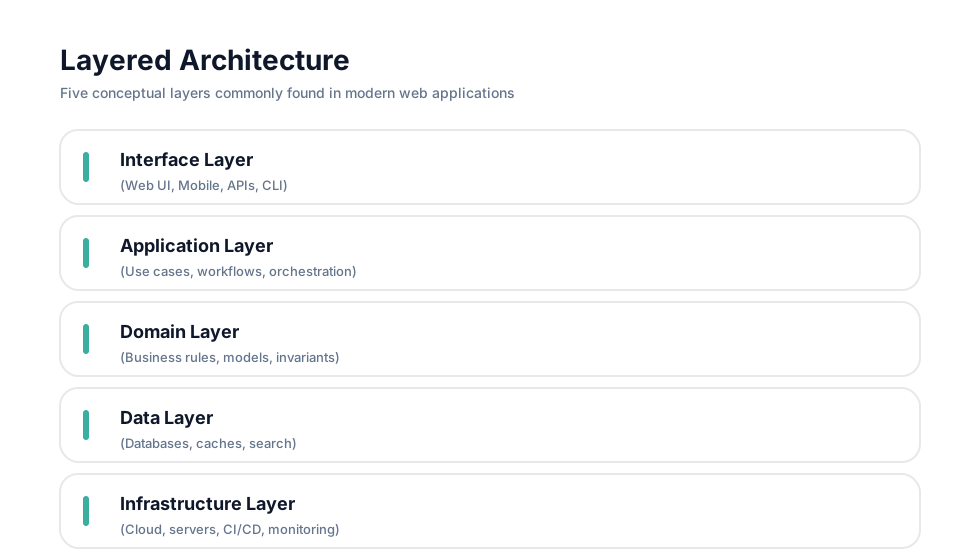
In a typical modern web application, you can think in terms of five conceptual layers:
1. Interface Layer
This is how users and external systems interact with the application — web interfaces, mobile apps, APIs, and command-line tools. Its responsibility is presentation and input handling, not business decision-making.
2. Application Layer
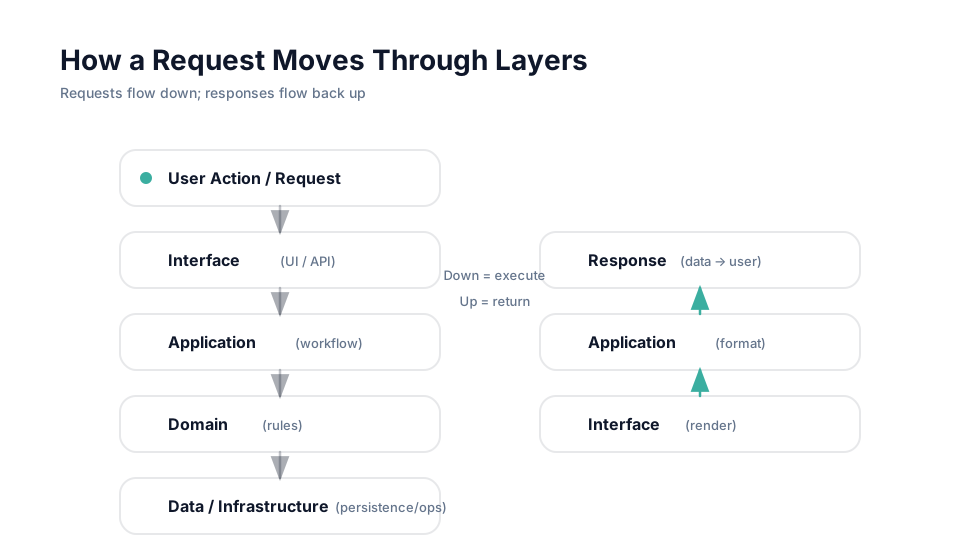
This layer coordinates workflows and use cases. It defines how actions flow through the system: what happens when a user signs up, places an order, or submits a form.
3. Domain Layer
The domain layer contains the core business logic and rules of the system. It defines what things mean, what actions are valid, and what constraints must always hold true. This is the conceptual heart of the application.
4. Data Layer
The data layer handles persistence: databases, caches, and search indexes. Its job is to store and retrieve information reliably, not to enforce business meaning.
5. Infrastructure Layer
This layer provides the technical environment in which everything runs — servers, cloud services, networks, deployment pipelines, and observability tooling.
Why This Separation Matters
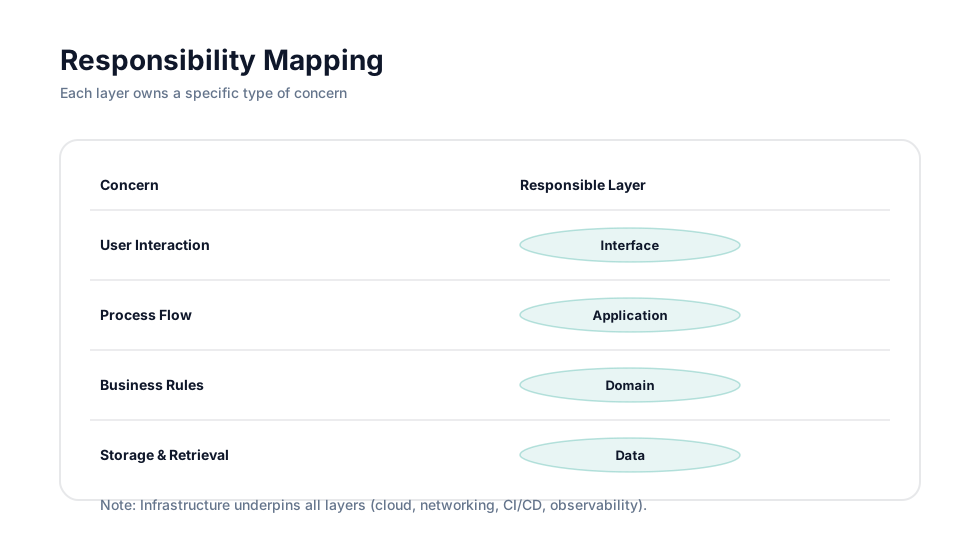
Separating responsibilities into layers makes systems more resilient to change. You can change the user interface without rewriting business rules. You can change the database without rewriting the application logic.
This separation improves maintainability, testability, and scalability — not just technically, but organizationally as well. Teams can work independently on different layers without constantly stepping on each other.
Common Mistakes
- Putting business rules directly in the user interface
- Letting database schemas define domain models
- Mixing infrastructure concerns into application logic
- Treating frameworks as architectural decisions rather than tools
These shortcuts often feel productive early on, but they create hidden coupling that makes systems brittle over time.
Layered Thinking Beyond Software
The idea of layers applies far beyond software systems. Organizations, markets, learning processes, and even personal productivity have layers of structure, rules, and constraints.
When something goes wrong, the cause is often at a deeper layer than where the symptoms appear. Layered thinking helps you ask better questions about where change should actually happen.
Conclusion
Modern web applications are layered not because engineers enjoy complexity, but because complexity exists. Layers are how we manage it.
Understanding layered architecture helps you design systems that grow gracefully instead of collapsing under their own weight. And that mindset — of separating concerns, respecting boundaries, and thinking in layers — is useful well beyond software.