
Ethical Implications of AI and Automation
“Ethics” can sound abstract until a system denies someone a loan, flags an innocent transaction, or quietly makes work harder for the people it was supposed to help. AI and automation turn judgment into infrastructure — and infrastructure tends to scale both benefits and harm.
This isn’t a moral philosophy essay. It’s a practical map: where ethical issues show up, and what responsible teams do before and after deployment.
Ethics Shows Up as Risk
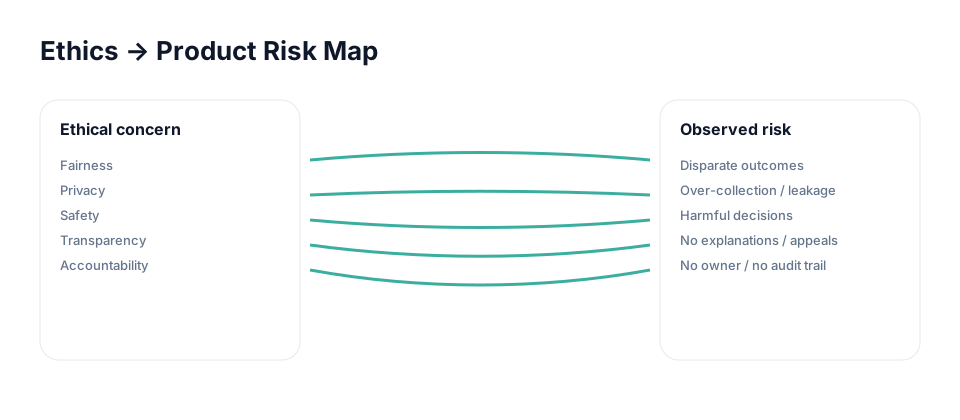
In real systems, “ethical issues” usually become one of these:
- Fairness: outcomes are systematically worse for certain groups.
- Privacy: data is collected, inferred, or shared beyond reasonable expectation.
- Safety: automation causes real-world harm, directly or via bad incentives.
- Transparency: people can’t understand or challenge a decision.
- Accountability: nobody is responsible when things go wrong.
The “Automation Tax” Nobody Budgets For
Automation is rarely free. It shifts work: from doing the task to handling exceptions, appeals, edge cases, and second-order effects. If you automate without designing these paths, you create invisible harm: longer resolution times, higher stress, and “computer says no” experiences.
A Useful Distinction: Assistance vs. Authority
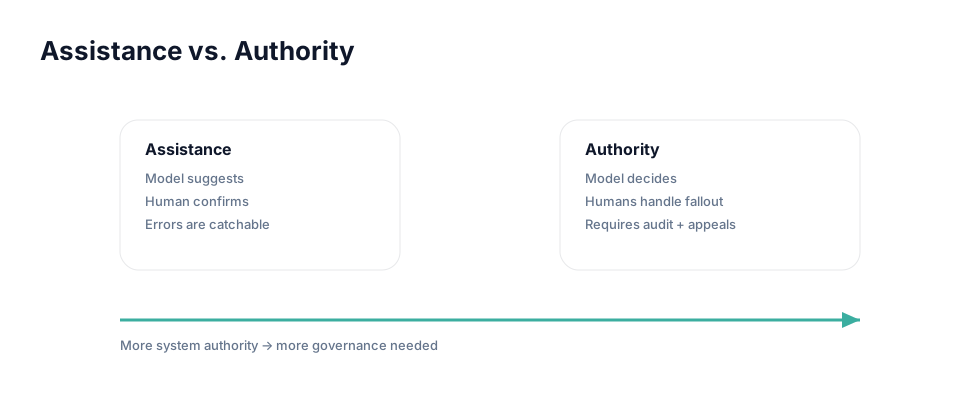
Two systems can use the same model but have very different ethical profiles:
- Assistance: the model suggests; a human confirms.
- Authority: the model decides; humans deal with the consequences.
Authority systems need stronger safeguards: logging, appeal routes, audits, and clear ownership. Assistance systems still need care — but they usually fail “softer.”
Practical Safeguards That Actually Help
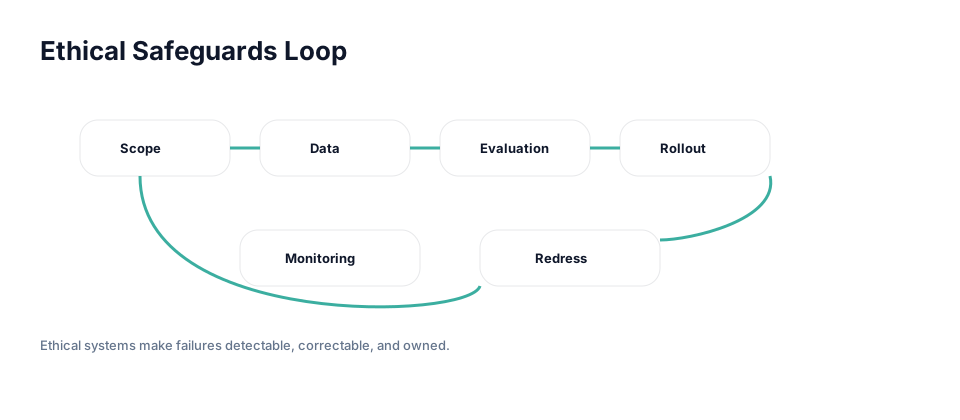
1. Scope the decision
Write down what the system is allowed to do, and what it must never do. Define “out of scope” explicitly (e.g., medical diagnosis, legal advice, protected attributes).
2. Build a redress path
People need a way to appeal, correct data, and get a human review. Without redress, errors become permanent.
3. Measure the right things
Accuracy alone is not enough. Track false positives and false negatives separately, and treat them as different kinds of harm. When possible, evaluate outcomes across relevant segments — and document limitations.
4. Roll out gradually
Staged rollouts and guardrails catch issues that don’t appear in offline evaluation. Real users behave differently than test sets.
5. Assign ownership
Someone must own: monitoring, incident response, retraining, policy changes, and user communication. “The model team” and “the product team” must share responsibility.
Ethics Is Design Under Constraints
Ethical systems aren’t perfect systems. They’re systems that: acknowledge tradeoffs, surface them, and give people ways to recover when the system is wrong. The goal is not to eliminate risk — it’s to reduce harm and make failures legible and fixable.
Conclusion
AI and automation change who has power, who bears the cost of mistakes, and who gets to challenge decisions. If you treat ethics as part of product quality — like security and reliability — you can build systems that scale benefit without scaling silent harm.