
Signal vs Noise: Thinking Clearly in an Information-Dense World
Modern life is not short on information. It’s short on attention, context, and calibration. When everything is urgent, nothing is meaningful. The goal isn’t to “consume less.” It’s to build filters that protect your thinking.
Signal is information that improves your decisions. Noise is information that feels informative but doesn’t change what you should do.
Signal Has Properties
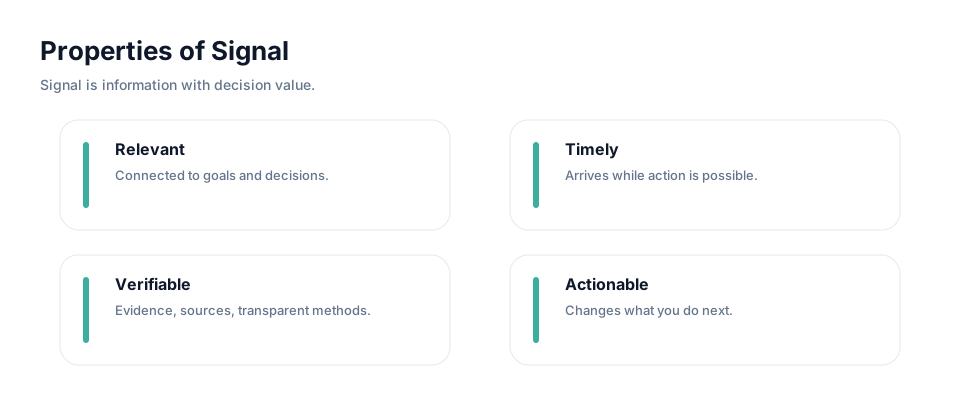
Useful information tends to be:
- Relevant: connected to your goals or responsibilities.
- Timely: arrives when action is still possible.
- Verifiable: anchored in evidence, not just confidence.
- Actionable: changes what you will do next.
Noise Isn’t Always Wrong — It’s Often Misleadingly True
Many noisy sources are “true-ish” but incomplete: cherry-picked stats, context-free anecdotes, hot takes, and outrage summaries. The danger is not misinformation. It’s miscalibration.
A Simple Personal “Information Budget”

If you want clearer thinking, treat attention like money: decide how much you can spend, where it goes, and what return you expect. Most people overspend on inputs and underinvest in synthesis.
Three Filters That Work in Practice
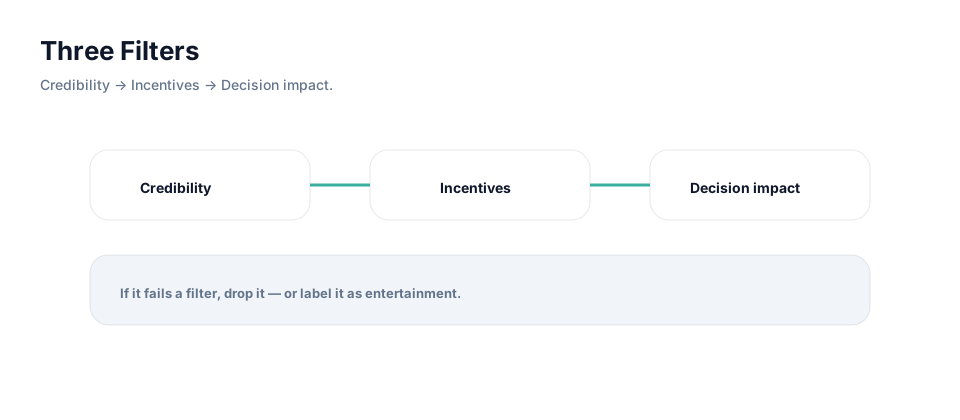
1. Credibility filter
Is the claim anchored to primary sources, direct experience, or transparent data? Or is it a game of “someone said that someone said”?
2. Incentives filter
What does the author gain if you believe this? Attention, identity, affiliation, sales, political points? Incentives don’t invalidate claims, but they do shape framing.
3. Decision impact filter
If this is true, what changes? If the answer is “nothing,” it’s entertainment. That’s fine — but label it honestly.
Make Space for Thinking
Clear thinking needs quiet. Not permanent disconnection — just regular blocks where your mind can integrate what it already knows. Without that space, you substitute reaction for reasoning.
Conclusion
The skill is not finding the “best” information. It’s building a system where information earns the right to influence you: relevance, credibility, incentives, and decision impact. When you do that, signal gets louder — even if the world stays noisy.