
First Principles vs. Experience: When to Use Which
First principles thinking has great marketing. Experience has great results. The real skill is knowing which tool to use in a given moment — and how to combine them.
This article offers a practical approach: how each mode fails, when each mode wins, and a simple “decision protocol” you can use in real work.
Two Different Engines
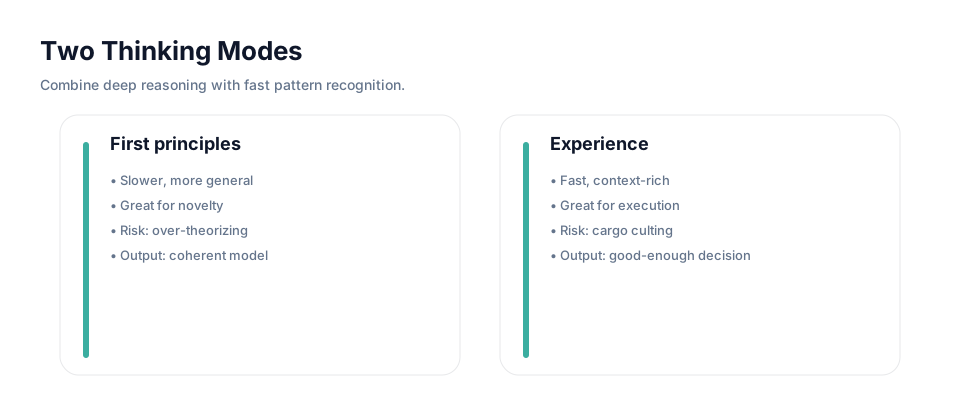
First principles means reasoning from fundamentals: constraints, physics, incentives, math, human behavior. It’s good for novelty, but can be slow and overconfident.
Experience means pattern recognition: “I’ve seen this shape before.” It’s fast and practical, but can mistake familiarity for truth.
When First Principles Wins
- Novel problems: new markets, new tech, new constraints.
- High leverage design: architecture, incentives, strategy.
- Debugging: when symptoms are misleading, fundamentals help.
- When best practices conflict: you need a coherent model.
When Experience Wins
- Time pressure: you need an answer now, not a thesis.
- Stable domains: problems repeat with small variations.
- Execution: shipping, operations, communication, negotiation.
- Human systems: culture and incentives often override “logic.”
Common Failure Modes
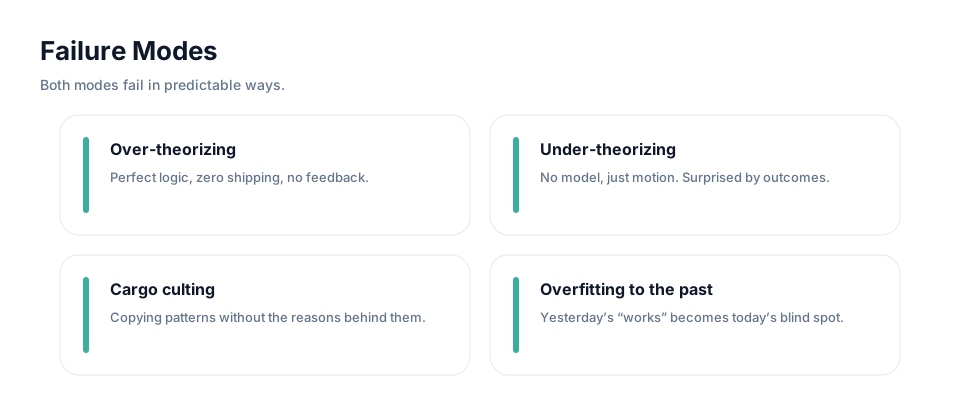
- First principles failure: endless reasoning, no contact with reality.
- Experience failure: cargo culting, repeating patterns that no longer fit.
A Simple Protocol: Model → Bet → Learn
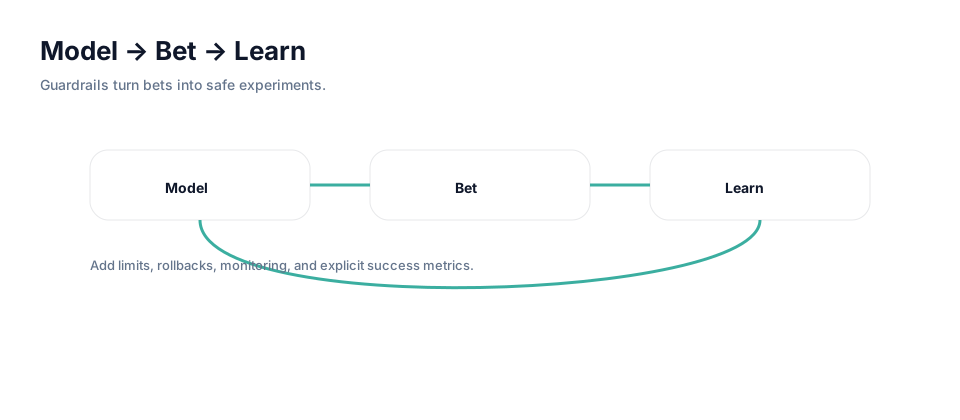
Use this three-step loop:
- Model: use first principles to explain the system in plain language.
- Bet: use experience to pick a move that’s likely good enough. Add guardrails.
- Learn: measure, review outcomes, and update your model.
The goal isn’t to always be “right.” It’s to get better at choosing which kind of thinking to apply — and to shorten the distance between your theories and your feedback.
Conclusion
First principles helps you see what could be true. Experience helps you act on what tends to be true. Great decision-makers use both — and they know when to switch.