
The Solo Builder Tool Stack: A Practical Kit for Shipping and Growing
There are infinite tools, but most solo builders need the same handful of outcomes: ship quickly, look professional, capture leads, get paid, and learn what users actually do.
This article is intentionally narrow: a homogeneous tool stack for solo developers / creators / entrepreneurs building a small product or content-driven business. It’s not the “best tools” list. It’s a coherent kit you can actually run.
The Stack at a Glance
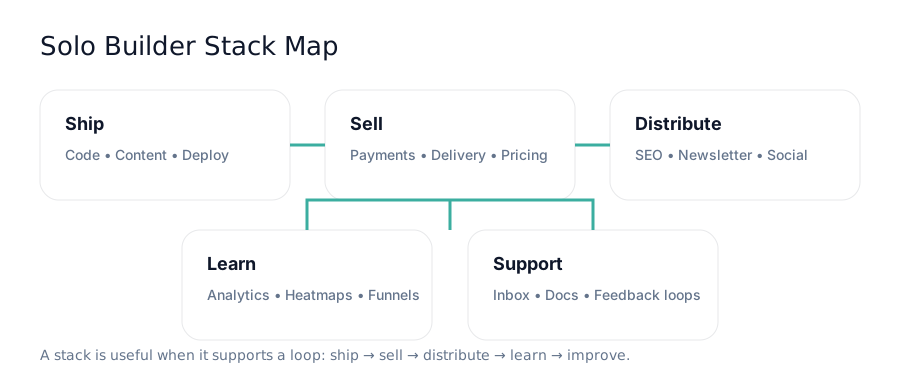
1) Build & Ship
Eleventy + a component mindset
For content-heavy sites, Eleventy is a sweet spot: fast, simple, and deploys everywhere. The key is treating layouts and partials like a tiny component system: navigation, post template, ad-slot blocks, author box, newsletter signup, etc.
GitHub + simple CI
Keep a clean repository, automate basics (linting, build, deploy), and you eliminate a whole class of “small friction” that drains motivation.
Hosting: a boring platform you trust
Pick a host that makes deploying static content painless. Your time is the scarce resource — not a few euros per month.
2) Design & Assets
Figma (or any consistent design system)
The primary value is not pixel perfection — it’s consistency: spacing scale, typography, button styles, and reusable sections. If your site looks consistent, it looks “bigger” than it is.
SVG-first thinking
Use SVGs for diagrams and simple illustrations. They load fast, scale perfectly, and integrate cleanly with a static site. (This post includes an SVG diagram you can reuse as a template.)
3) Sell & Get Paid
Payments
Use a payment provider that supports taxes/VAT where relevant, handles receipts, and has strong developer tooling. The goal is: sell to anyone, anywhere, with minimal support overhead.
Digital delivery
For digital products, you need reliable delivery: license keys (if applicable), download links, and account access. Choose a workflow that requires the least custom glue.
4) Distribution & Content
Email newsletter
Algorithms are fickle. Email is a direct channel. A simple cadence (weekly or biweekly) with a single clear CTA is more sustainable than “posting everywhere.”
Scheduling
If you publish on multiple platforms, schedule posts in batches. Content creation is creative work; scheduling is admin work. Don’t mix them.
5) Analytics & Feedback
Analytics you can act on
The best analytics setup is the one you check and use. Track only what changes decisions: top landing pages, conversion rate, signup sources, retention signals.
A single feedback inbox
Keep user feedback in one place. Whether it’s a support email, a form, or a lightweight helpdesk, the key is centralization: feedback becomes searchable and patterns become visible.
How to Choose Tools Without Getting Stuck
- Prefer tools that reduce coordination (solo builders don’t have meetings to “fix process”).
- Prefer defaults (a tool with good defaults saves time every week).
- Prefer migration paths (exporting data shouldn’t be a nightmare).
- Prefer boring reliability (cool tools come and go; your business shouldn’t).
Conclusion
A coherent stack beats a perfect stack. If your tools help you ship consistently, collect payment, learn from users, and reduce admin work, you’re already ahead of most “tool power users.”