
Passive Income Ideas (Realistic Ones)
“Passive income” is often marketed as money with no effort. In reality, most streams look like: setup work → distribution → maintenance. The question isn’t “can it be fully passive?” — it’s “how much work does it take to keep it healthy?”
This article focuses on ideas that are realistic for normal people with limited time, and that don’t require questionable schemes, high leverage, or constant social posting.
A Simple Framework: Capital vs. Skill
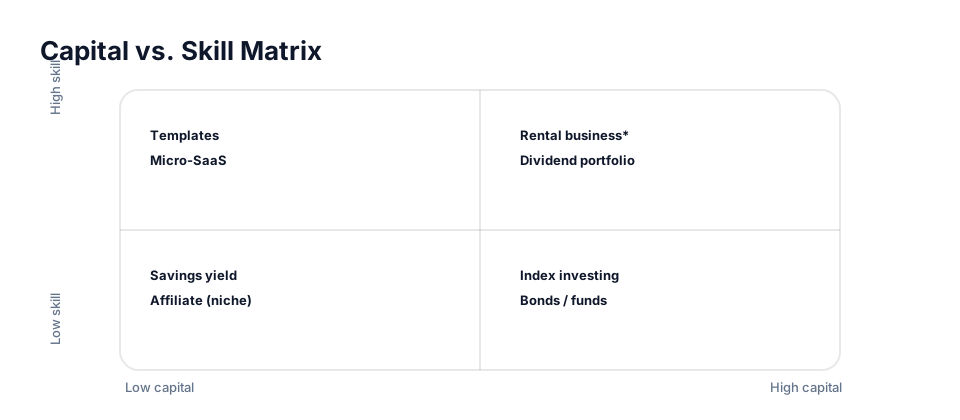
Most “passive” options sit somewhere on two axes:
- Capital required: money you invest upfront
- Skill required: expertise you apply to create value
Realistic Options That Scale Well
1. Broad Index Investing
This is the boring baseline: regular contributions into diversified funds, long time horizon, low fees. It’s not exciting — and that’s why it works for many people. The “work” is mainly discipline and risk management.
2. High-Interest Savings / Cash Management
Not a wealth engine, but a useful “low-maintenance yield” for emergency funds and short-term goals. The main benefit is simplicity and flexibility.
3. Digital Products (Templates, Checklists, Not Courses)
Courses are hard to keep updated. Templates and tools can be simpler: Notion templates, spreadsheets, legal-ish checklists (non-lawyer), onboarding packs, pitch decks, interview prep kits. The best ones solve a specific pain for a specific audience.
4. Micro-SaaS (Small Software With a Narrow Promise)
A tiny product that does one job well: generate invoices, monitor uptime, create reports, sync data, schedule reminders. “Passive” comes from stable demand and low support burden — not from avoiding work entirely.
What Kills “Passive” Streams
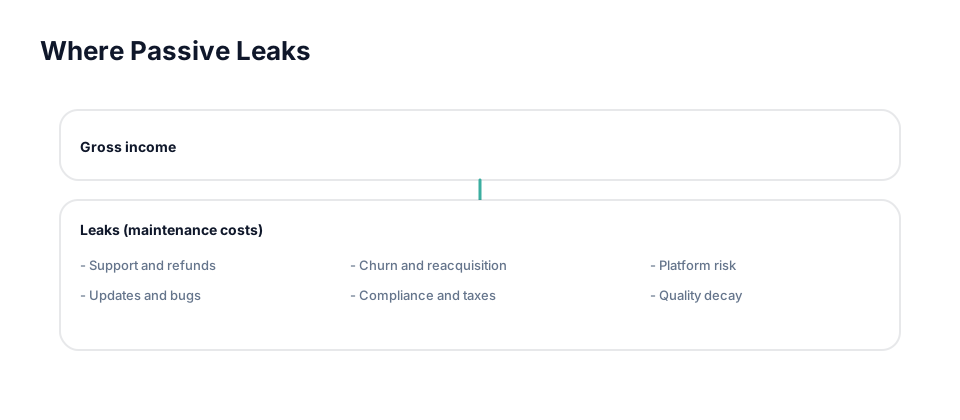
The most common leaks:
- Support load: you become a part-time help desk.
- Churn: income depends on constantly replacing customers.
- Platform risk: algorithm changes, marketplace policy shifts.
- Compliance / tax complexity: especially with cross-border sales.
- Quality decay: your asset stops matching current reality.
How to Choose an Option That Fits You
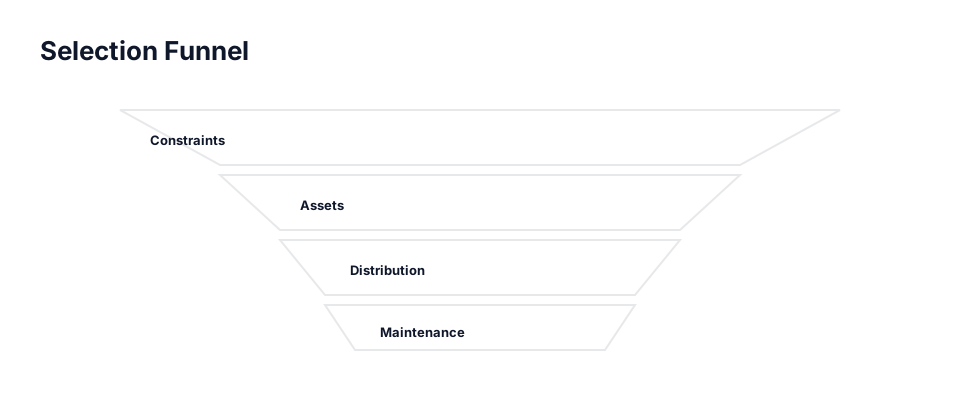
A practical selection process:
- List constraints: time per week, budget, risk tolerance.
- List assets: skills, audience, domain experience, tools you already use.
- Pick a distribution channel: marketplace, SEO, partnerships, email list.
- Define maintenance: what you’ll do monthly to keep it healthy.
- Start small: ship one thing; improve it based on usage.
Conclusion
“Passive income” is best understood as low ongoing effort relative to value produced. The most reliable paths are the ones that can survive boring weeks: they don’t require constant hype, constant posting, or constant reinvention.