
What I Learned Building a Tiny Reading Digest Tool
I like building small tools that solve one annoying problem. This time the problem was simple: I saved too many articles, forgot why I saved them, and never extracted anything useful.
So I built a tiny “Reading Digest” tool: paste a link, add one sentence explaining why it matters, and later get a weekly digest. No infinite feeds, no social layer, no complicated tagging system — just a memory aid.
The Simplest Version That Could Work
The first version had three features:
- Add a link
- Add a short note (“why I saved this”)
- Email a weekly digest of links + notes
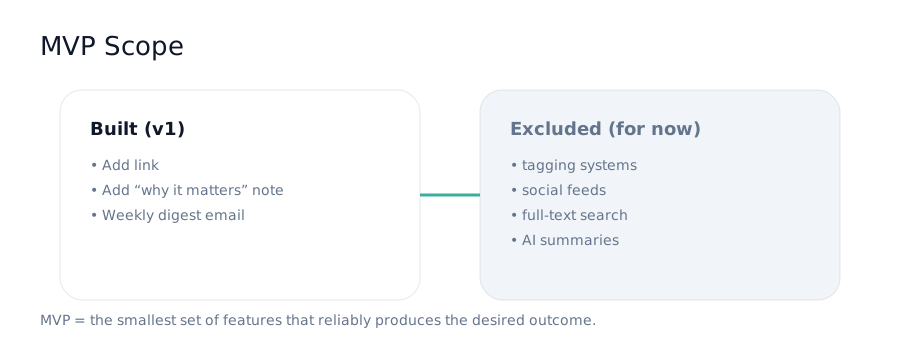
I didn’t build tagging, full-text search, highlights, social sharing, or AI summaries. Not because those are bad ideas — but because they are very good ways to never ship.
Lesson 1: Scope Is a Product Feature
When you’re building, scope feels like a constraint. But in the finished product, scope becomes clarity. Users don’t want “all the features.” They want one reliable outcome.
The outcome here was: “I will remember why I saved this.” Everything else was secondary.
Lesson 2: A Tight Feedback Loop Beats a Perfect Plan
The tool got better when I tightened the loop:
- Ship a small improvement
- Use it in real life for a week
- Notice friction
- Fix the friction
Most roadmap planning is guessing. Real usage makes the next step obvious.
Lesson 3: Your Data Model Is Your Future
Even small tools benefit from careful data modeling. I kept the core record extremely simple: URL, title (optional), note, created_at.
The key decision was to store the note as a required field. That forced the user (me) to do the thing the tool was designed for: capture meaning, not just links.
Lesson 4: Reliability Is a Growth Strategy
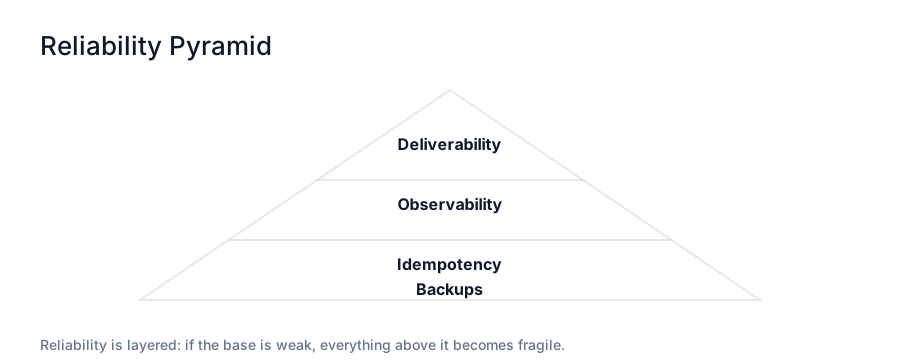
A digest tool that fails silently is worse than no tool. I learned to treat boring infrastructure as product quality:
- deliverability (emails actually arrive)
- observability (you can see failures)
- idempotency (retries don’t create duplicates)
- backups (because accidents happen)
Lesson 5: Monetization Comes After Trust
I considered adding a paid tier early, but the product wasn’t trustworthy yet. The moment I had consistent weekly delivery and a smooth “add link + note” flow, pricing became easier to reason about.
A practical approach: ship a free version that proves the habit, then charge for higher limits and comfort features (history, export, multiple digests, team sharing).
Conclusion
Building small tools is a great way to learn. The lessons are always the same: keep scope tight, create feedback loops, model data carefully, prioritize reliability, and earn trust before monetizing.
If you’re building something right now, ask: what is the one outcome your product must deliver — and what can you remove until that outcome is undeniable?